


A skid steer maintenance checklist needs three separate routines: a pre-use condition check, servicing at the intervals in the correct machine and engine manuals, and a clear response to defects. A general checklist can organise the work, but it cannot supply the oil grade, adjustment value or service interval for an unidentified mini loader.
The 12-point daily check below is the core of this page. Use the rest of the plan to prepare a fleet inspection sheet and a service record. It is written for owners and supervisors, not as an instruction to dismantle hydraulic equipment or repair a safety device. Tasks that require technical competence belong with a trained person using the manufacturer’s procedure.
Key Takeaways
- Keep pre-use checks, scheduled servicing and defect repairs as separate records.
- Identify the machine serial number and installed engine before ordering fluids, filters or parts.
- Stop using a loader with a safety-related defect. A completed checklist does not cancel that defect.
- Isolate energy and support raised components using the approved procedure before maintenance.
Machine and engine records to keep together
The machine needs a record of its model, serial number, engine identity and the applicable operating and service manuals. A model name alone may not identify the engine configuration supplied with an individual order.
For example, the public BL-T360-H specification lists a single-cylinder, four-stroke engine type, while the BL-T460-H specification lists a two-cylinder, four-stroke type. Both pages offer engine options. Those facts explain why a fleet should not copy one engine’s service sheet onto every loader.
Record the installed engine details from the delivered machine and its documents. Confirm the correct manual revision and service requirements with the supplier if anything is missing or inconsistent. Select the filter by the specified part number and application, rather than outside dimensions alone.
Keep this information in a machine-specific file accessible to the operator and maintenance team. Include previous service entries, unresolved defects and any approved changes. A folder of generic manuals is less useful than a clear link between the actual loader and the instructions that apply to it.
What our spec sheets tell a maintenance planner
The published BOB-LIFT technical sheets already give the facts a service plan starts from. The table below copies them for three loaders, as listed on the product pages on 16 October 2026.
| Specification | BL-T360-H | BL-T460-H | BL-T490-C |
|---|---|---|---|
| Engine options | KOOP / Rato / Briggs & Stratton | Zongshen / KOOP / Rato / Briggs & Stratton | KOOP / Rato / Briggs & Stratton Vanguard |
| Engine type | 1-cylinder, 4-stroke | 2-cylinder, 4-stroke | 2-cylinder, 4-stroke |
| Fuel | Petrol / diesel | Petrol / diesel | Petrol / diesel |
| Fuel tank | 5 L | 10 L | 10 L |
| Starting | Electric start | Electric start | Electric start |
| Hydraulic pressure | 17 MPa | 17 MPa | 16 MPa |
| Running gear | Rubber tracks | Rubber tracks | Rubber tracks |
Three planning points follow directly. Four engine makes are offered on the BL-T460-H alone, so the oil, filters and spark plugs or injectors follow the engine actually fitted, not the model name. A 5 L tank on the BL-T360-H means the machine may need refuelling during a shift, which makes the cool-down and spill rules in the daily check matter more. All three run rubber tracks, so track condition belongs on every daily sheet.
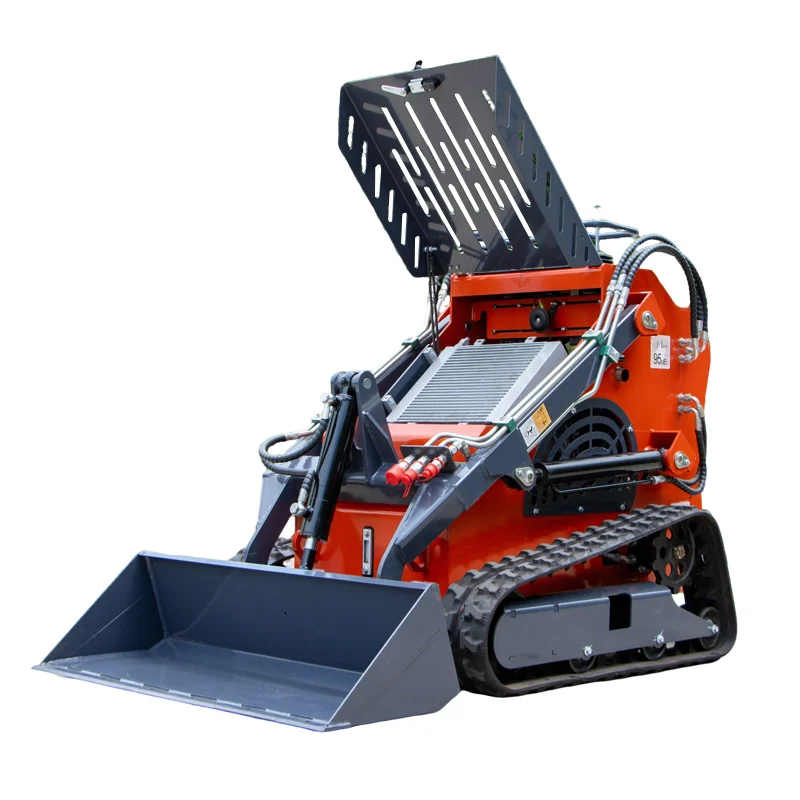
How should the loader be made safe before maintenance?
Make the loader safe before approaching moving parts, stored pressure or raised equipment. Use the shutdown and isolation procedure for the machine and the task, rather than treating an engine stop as the whole isolation process.
HSE’s maintenance guidance calls for competent people, planned work, safe isolation and control of stored energy. It also identifies the need to support parts that could fall. These are maintenance principles; the actual isolation points and support devices must come from the loader’s instructions.
As a general starting point, park in a suitable secure area, lower the working equipment to the ground, apply the parking brake, stop the engine and prevent unauthorised restart as directed by the manual. Allow hot parts to cool. Then follow the task-specific instructions for residual pressure and other stored energy.
Secure raised arms with the approved support
If work requires raised lift arms, use the support device and procedure approved for that machine. If the approved device is missing, damaged or unidentified, stop and obtain the correct instructions.
The NIOSH alert on skid-steer loader injuries specifically addresses crushing hazards and manufacturer-recommended lift-arm supports. Its examples include seated loaders; they do not establish the equipment fitted to every mini loader.
Verify pressure release using the approved service procedure, keeping hoses and fittings closed during the check. Suspected pressurised leaks require competent assessment under the service procedure. Keep hands away from suspected leaks and do not attempt a repair simply because the visible leak looks small.
Daily pre-start checks
Complete the static checks with the loader parked, equipment lowered and the machine safely shut down. Items 11 and 12 are the separate after-start checks: perform them only when the static inspection is satisfactory, from the proper operating position and under the manual’s procedure. Use the method and values in the manual for every item, and mark equipment that is not fitted as not applicable. Wear hearing protection when operating the machine.
- Check engine oil and fuel levels; refuel only under the shutdown and cooling conditions specified.
- Check coolant, if fitted, and hydraulic oil levels under the specified temperature and equipment-position conditions.
- Inspect the air filter restriction indicator, if fitted, and record whether service is indicated.
- Inspect the radiator, if fitted, and other cooling surfaces for debris; clear a clogged screen only with the machine safely shut down.
- Inspect track tension and track damage, or tyres on a wheeled machine; report a loose track before use.
- Inspect pins, bushings and grease nipples for damage, missing retainers or blocked access.
- Check the quick-attach mechanism and attachment locking pins for full engagement and damage.
- Inspect hose fittings and hose routing for wetness, abrasion or leakage without touching a suspected pressurised leak.
- Inspect battery terminals and cables visually for looseness, corrosion or damage; leave electrical work to an authorised person.
- Check safety labels for legibility and inspect access steps and handholds.
- After starting from the proper operating position, observe warning lamps and gauges and stop and report any abnormal indication.
- In the designated clear test area, check controls and parking brake function without exposing anyone to machine movement.
Ohio State University’s skid loader training checklist covers fluid levels, hydraulic and coolant hoses, radiator debris and safety-system checks. The list here expands that framework for a fleet inspection form; it is not a BOB-LIFT service specification.
Record a wet hose fitting by its exact location and keep clear for assessment. Record a clogged radiator screen as an obstruction, not a diagnosed cooling-system failure. A visibly loose track needs inspection under the specified tension procedure, not an improvised adjustment. These observations make a defect report useful without asking the operator to diagnose or repair it.

Engine and hydraulic service checks
Organise service access, replacement parts and clean fluid-handling equipment before opening the machine. Assign the task to a person competent for that work, with the installed engine identified on the work order.
Check levels under the conditions stated in the manual. Temperature, parking position and equipment position may be part of the method. A reading taken under a different condition may lead to unnecessary filling or an incorrect conclusion about a leak.
Keep contamination out during service
Clean the relevant area before opening a service point, using the approved cleaning method. Protect open connections and use the specified clean equipment. A replacement part should stay protected until it is ready to fit.
For hydraulic work, match the part specification and follow the isolation and cleanliness procedure. Confirm the specified fluid and its compatibility before adding or replacing it. If the fluid identity or previous service history is uncertain, ask for a controlled recovery plan rather than adding an unknown product.
Separate cleaning from diagnosis
Debris around cooling surfaces should be dealt with according to the manual, with the machine safely shut down. Allow the cooling system to cool and follow the prescribed pressure-release procedure before opening it. Avoid directing cleaning equipment at seals, connectors or components unless the approved method allows it.
A recurring hot-running condition or warning needs diagnosis. Cleaning visible dirt and restarting repeatedly is not proof that the cause has been removed. Record what happened, when it happened and whether the same condition has occurred before.
Running gear and frame inspection
Inspect running gear and visible structural parts for damage or an abnormal condition, then use the model-specific service procedure for any adjustment. Track tension, tyre pressure and fastener torque are not universal mini-loader values.
Keep debris from hiding damaged parts or obstructing inspection. Where cleaning requires access near moving components, isolate the machine first. Secure the running gear against movement before accessing the space between a track and its drive components.
Record a damaged track, tyre, roller or retaining part with its location. Use photographs taken from a safe position. A picture can support an assessment, but it cannot establish the remaining strength of a damaged structural component.
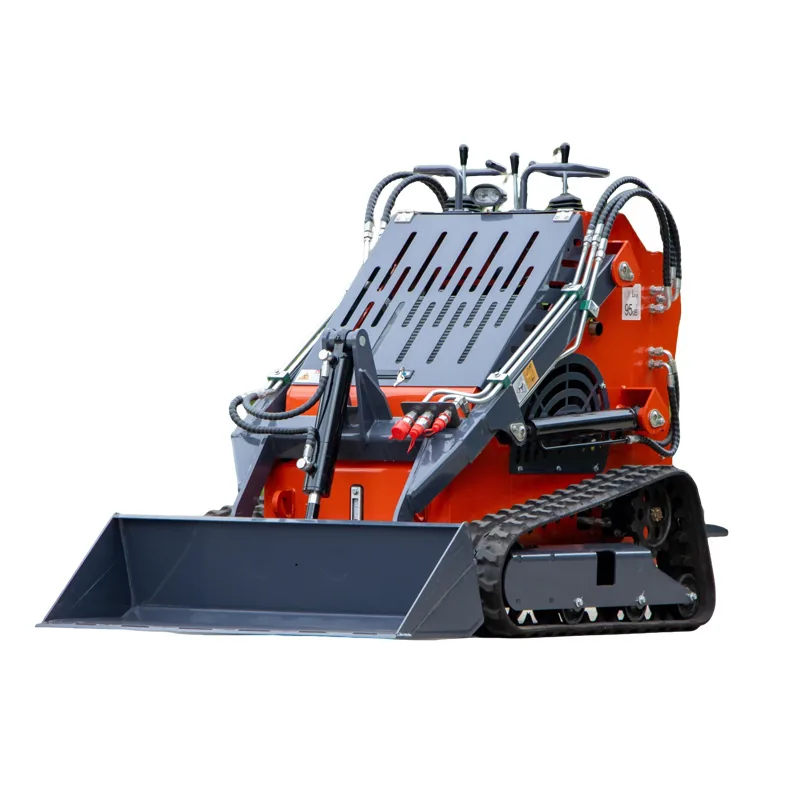
Cracks, bent structural parts, missing pins or damaged securing devices need competent assessment before use. Obtain an approved repair plan before welding or modifying a safety-related structure. The supplier needs to know the exact location and extent of the damage before a repair plan can be agreed.
Build the schedule from the service manual
Build the schedule from the applicable manuals, then record the next due task against the machine’s actual service history. Keep usage-based requirements and calendar-based requirements distinct when the manual specifies both.
For each task, record its source, trigger, required parts, responsible person and completion evidence. If the manual describes special conditions or an initial service requirement, include those explicitly. Use the interval specified for the identified machine and engine, with its manual reference recorded.
At manual intervals
- Engine oil and filter: record the specified oil, filter identifier and replacement trigger from the installed engine manual.
- Hydraulic filter: record the correct element and the machine manual’s replacement interval and cleanliness procedure.
- Air filter: follow the prescribed inspection, cleaning if permitted, and replacement criteria; distinguish a restriction indication from a scheduled task.
- Greasing: list the approved lubrication points, grease specification and frequency, including any instruction for severe operating conditions.
Add each task to the machine record with its manual reference and next due meter reading or date. If a task is not applicable to the delivered configuration, record that explicitly rather than leaving an unexplained blank.
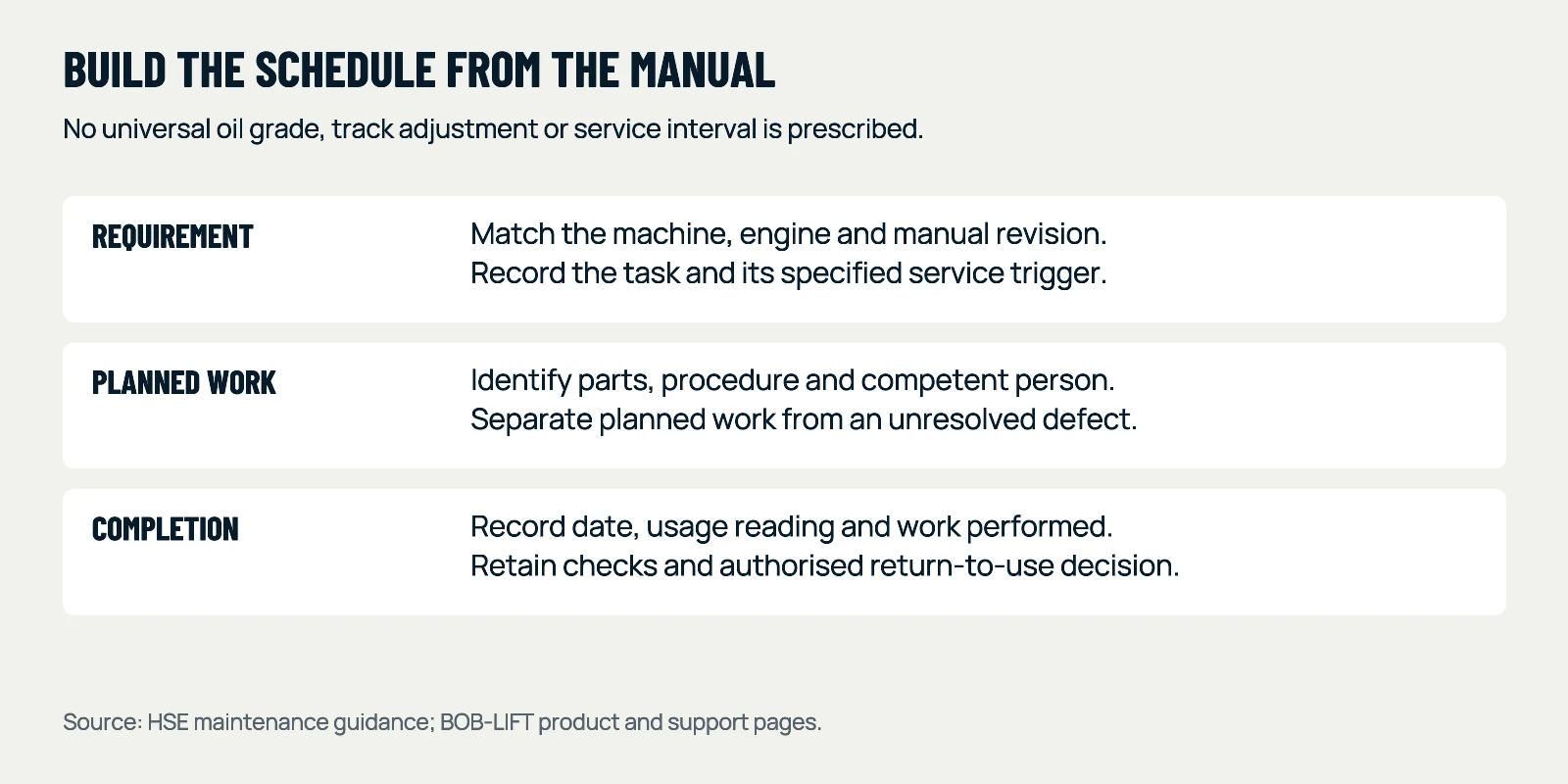
A workable record includes the date, meter reading where available, task, part identification, fluid specification where relevant and the person completing the work. Record any unresolved observation separately so it is not mistaken for a completed repair.
Mark a service complete only after the required work and completion checks are documented. Distinguish planned, waiting for parts, work completed and released for use. This helps the next operator understand the real machine status without relying on a verbal message from the previous shift.
What information makes a defect report useful?
A useful defect report identifies the machine, describes the symptom and states whether the loader has been taken out of use. It separates observed facts from an operator’s possible explanation.
BOB-LIFT’s support process asks for the model, serial number and a photo or short video. Add the operating condition, any displayed warning and the service history relevant to the symptom. Capture evidence only from a safe position and with the machine in a safe condition.
- Identify the exact machine and installed engine.
- Describe what was observed and where.
- State whether the symptom is constant or occurs during a particular action.
- List recent service work or changes without guessing their causal role.
- Attach clear photographs from a safe position.
- Record who controls the machine’s out-of-service status.
After repair, an authorised competent person should confirm the required checks and release the machine under the site’s procedure. A successful start is not enough evidence that the original defect has been resolved.
Estimate maintenance cost by task
Build the estimate from the planned work, confirmed quantities and local quotations. Separate routine servicing from condition-based repairs so that a damaged track does not distort the expected filter-service budget.
| Cost line | Inputs to collect | Calculation |
|---|---|---|
| Filters | Confirmed part numbers and quantity due | Quantity multiplied by quoted unit cost |
| Fluids | Specified fluid and service quantity | Quantity multiplied by quoted unit cost |
| Grease | Specified product and expected consumption | Consumption multiplied by unit cost |
| Track or tyre wear | Inspected condition and replacement quote | Include replacements expected within the planning period |
| Labour | Task hours, access and approved labour rate | Hours multiplied by rate |
| Downtime | Planned unavailable hours and business impact | Use the business’s documented lost contribution or substitute-machine cost |
Total the confirmed lines and show uncertain repairs separately with their assumptions. Avoid double-counting lost output and replacement-machine costs when the replacement prevents that loss. Update the estimate after service with actual quantities, labour and unavailable time. The difference between estimate and actual then improves the next service plan without inventing a universal maintenance price.
Frequently Asked Questions
How often should a mini skid steer be serviced?
Use the intervals in the manuals for the delivered loader and installed engine. Pre-use inspection does not replace scheduled servicing. This article deliberately gives no universal hour or calendar interval.
Can one checklist cover a mixed fleet?
A common form can organise the records, but each machine needs its own applicable checks and values. The mini skid steer range contains different configurations; a shared product category does not make service instructions interchangeable.
Can an operator repair a hydraulic leak?
Only someone competent and authorised for that task should perform the repair, using the service procedure and safe isolation. An operator can report the location and symptoms without touching a suspected pressurised leak.
Prepare the machine record before asking for service advice
For a missing instruction or an unresolved maintenance question, send the model, serial number, engine details and relevant photographs to BOB-LIFT’s service enquiry team. Explain the machine’s current status. That gives the team a useful basis for confirming the applicable documents or arranging the next assessment without guessing the configuration.